Disclosure: As an Amazon Associate, we earn from qualifying purchases. We may also earn from other affiliate links at no extra cost to you.
Cold Water, Hidden Movement, and Better Days Outside: Why a Good Wetsuit Belongs in More Outdoor Gear Kits
Most sportsmen think of a wetsuit as diving gear, surf gear, or something a spearfisherman wears when he disappears under the surface with a mask and fins. That is true, but it is not the whole story.
A good wetsuit can also be a serious piece of cold-water outdoor equipment.
For hunters, anglers, kayakers, coastal explorers, and anyone who spends time around cold water, the right wetsuit can help solve two problems that show up repeatedly: staying warm and staying functional when water, wind, mud, spray, and low temperatures start working against you.
That matters during early-morning coastal hunts. It matters when you are launching a kayak before sunrise. It matters when late-fall fishing keeps you standing in cold spray or kneeling on a wet shoreline. It matters when you are checking decoys, crossing shallow water, scouting marsh edges, or spending long hours around conditions that are not cold enough for full survival gear but cold enough to make poor clothing choices miserable.
That is where brands like Seaskin are worth a look. SeaskinShop carries wetsuits and wetsuit accessories for men, women, and kids, including full suits, shorty suits, gloves, hoods, socks, and spearfishing-style camo options.
You can check out SeaskinShop here:
Why Wetsuits Matter for Hunters and Anglers
The outdoor world tends to separate gear into neat little boxes.
Duck hunters buy waders. Fishermen buy bibs. Kayakers buy splash jackets. Divers buy wetsuits. Campers buy base layers. That kind of thinking is useful, but it can also cause people to overlook gear that crosses over well.
A wetsuit is one of those overlooked crossover items.
A wetsuit is not designed to keep you completely dry. Instead, it traps a thin layer of water between your body and the suit. Your body warms that layer, and the neoprene helps reduce heat loss. That makes wetsuits useful when you expect to get wet or when staying perfectly dry is unrealistic.
That is a different job than rain gear or insulated hunting clothes. A waterproof jacket may shed rain, but once water gets inside, the insulation can lose effectiveness. Heavy cotton or loose clothing can become dangerous in cold water. A wetsuit, on the other hand, is built around the assumption that water is part of the environment.
That makes it useful for:
Cold-water fishing
Kayak fishing
Spearfishing
Snorkeling
Coastal scouting
Marsh work
Boat launching
Wet-weather shoreline work
Youth water activities
Early- and late-season water sports
For hunters and fishermen, the key is not pretending a wetsuit replaces every other piece of gear. It does not. The key is knowing when it can fill a gap.
When a Wetsuit Makes Sense Outdoors
A wetsuit makes the most sense when you are around water long enough that normal clothing becomes a liability.
That may be a cold morning on the coast, a spring kayaking trip, a late-fall fishing trip, or a situation where you know you may be kneeling, wading, splashed, or partially submerged. It may also be useful for spearfishing, freshwater diving, underwater structure inspection, swimming from a boat, or working around docks and shorelines.
For the average outdoorsman, a wetsuit is not something you wear to sit in a deer stand. It is not a replacement for breathable waders when you are fly fishing a shallow stream all day. It is not the first choice for long hikes through brush.
But for cold, wet, close-to-water activity, it can be a smart addition.
The best examples are the days when you already know you are going to get wet.
That might be a kayak angler launching in cold water. It might be a fisherman working rocky banks where spray is constant. It might be a coastal hunter handling decoys and gear in shallow water. It might be someone scouting tidal areas or fishing from a small boat where dry footing is never guaranteed.
In those conditions, dressing like you will stay dry can be a mistake. Dressing like water is part of the plan is often smarter.
Choosing the Right Thickness
One of the first things to understand about wetsuits is thickness.
A 2mm wetsuit is usually lighter, more flexible, and better for warm water or mild conditions. A 3mm wetsuit is a common all-around choice because it gives you more warmth without becoming too bulky. A 5mm wetsuit steps into colder-water territory, especially when paired with gloves, socks, and a hood.
Thickness is always a tradeoff.
Thicker neoprene usually means more insulation, but it can also mean less flexibility. Thinner neoprene gives you easier movement, but it does not hold warmth as well. That is why the right choice depends on the activity.
For kayak fishing, mobility matters. For spearfishing, flexibility and stealth matter. For cold-water shoreline work, warmth may matter more. For kids swimming or playing around cold water, comfort and fit matter more than extreme performance.
A good general breakdown looks like this:
2mm: warm water, mild weather, shorty suits, summer activity
3mm: versatile all-around use, cool water, kayak fishing, spring and fall conditions
5mm: colder water, longer exposure, diving, spearfishing, cold-weather use
5mm accessories: gloves, hoods, and socks for extra warmth where heat loss is common
For many outdoorsmen, a 3mm full wetsuit is the most practical starting point. It offers enough warmth for many cool-water conditions without feeling like overkill.
Why Accessories Matter
A wetsuit alone is only part of the system.
Hands, feet, and head lose heat quickly, especially when wind and water are involved. That is why gloves, socks, and hoods matter. If you have ever had warm layers on your body but numb hands on a cold-water fishing trip, you already know the problem.
SeaskinShop carries wetsuit accessories such as diving socks, scuba gloves, and hoods. For hunters and anglers, these can be just as useful as the main suit.
A pair of neoprene socks can help inside dive boots, water shoes, or certain wet-weather setups. Gloves can help when handling gear, paddles, fish, anchor lines, decoys, or wet rope. A hood can make a major difference when you are dealing with colder water or wind exposure.
For a full cold-water setup, think in terms of a system:
Full wetsuit
Neoprene gloves
Neoprene socks or boots
Neoprene hood
Outer shell or wind-blocking layer when appropriate
Dry change of clothes packed in the truck or boat
That last item matters. A wetsuit can help you function in wet conditions, but once the day is over, you still want dry clothes, dry socks, and a warm layer ready.
Camo Wetsuits and Spearfishing Gear
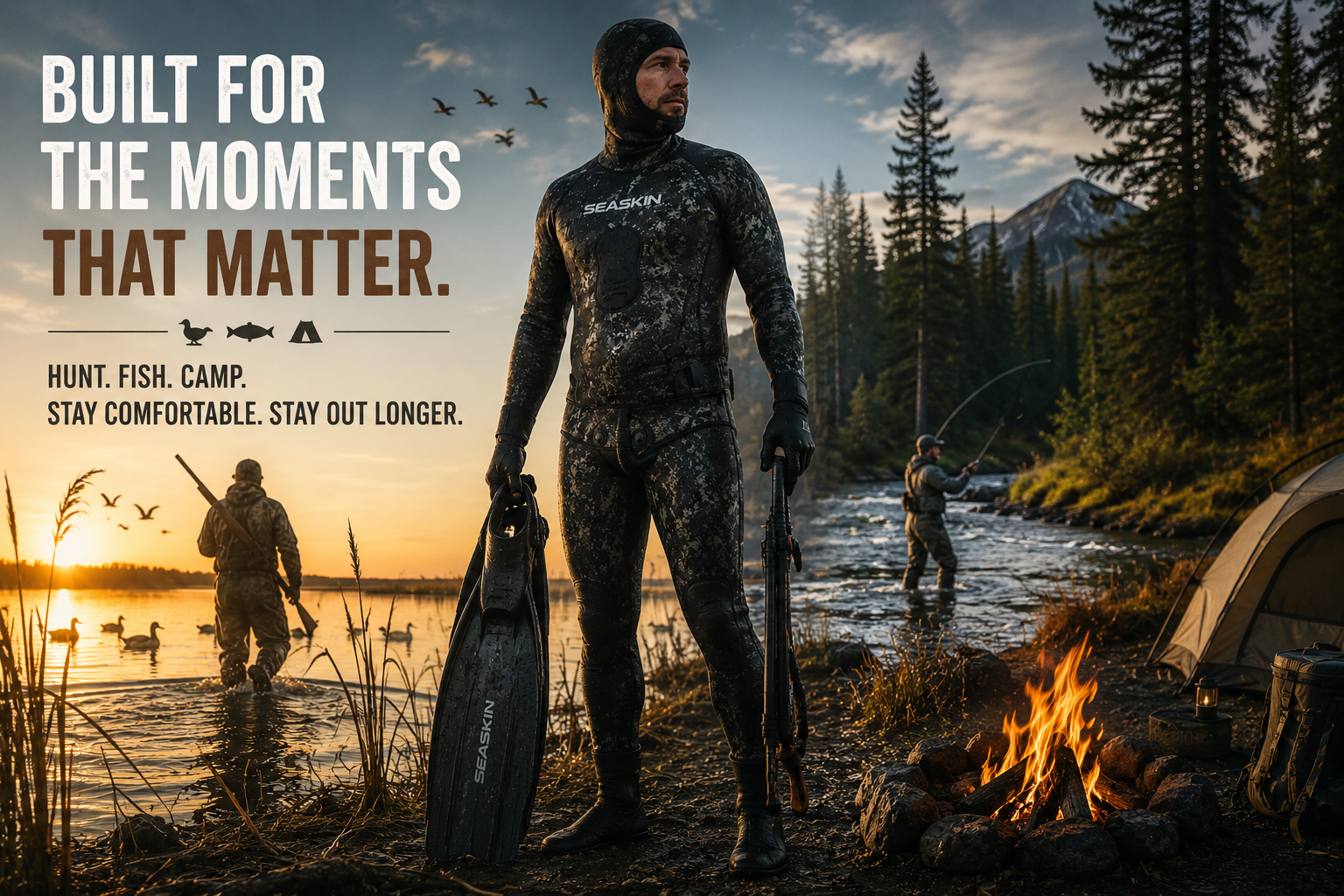
One of the more interesting crossover areas is the camo spearfishing wetsuit.
Spearfishing wetsuits are often designed with camouflage patterns because underwater hunters need to blend into their surroundings. That same idea can appeal to coastal hunters, marsh users, and outdoorsmen who want low-visibility gear around water.
A camo wetsuit is not automatically a duck hunting suit, but it can serve certain water-based needs well. It may be useful for shallow-water scouting, spearfishing, coastal work, or water activities where blending in matters.
For RealAmericanOutdoors.com readers, this is the practical angle: gear does not have to belong to only one category. If it works, it works.
A camo wetsuit may be built for spearfishing, but the same features as thermal protection, close fit, flexibility, and a subdued pattern can make sense in other wet outdoor settings.
Wetsuits for Fishing
Fishing puts people in more cold-water situations than they sometimes admit.
Boat decks get wet. Kayaks sit low. Shorelines get slick. Wind pushes spray into your clothing. A fall fishing trip can begin comfortably and turn raw fast once clouds roll in or wind picks up.
A wetsuit is not ideal for every fishing trip, but it can be useful for:
Kayak fishing in cooler water
Wade-adjacent fishing where full waders are not ideal
Fishing from small craft
Bank fishing around rocks and spray
Late-season trips where accidental immersion is a concern
Warm-weather trips with long periods in and out of water
For kayak anglers especially, cold-water safety is serious. Dressing for the water temperature rather than the air temperature is a good habit. If the air feels mild but the water is cold, a spill can become dangerous quickly.
A wetsuit can be part of that safety plan.
It does not replace a personal flotation device. It does not remove the need for caution. But it gives you an extra layer of thermal protection if you end up wet.
Wetsuits for Hunting
Hunters are often rougher on gear than surfers or recreational swimmers. They kneel, crawl, haul, drag, carry, and stand around in ugly weather. That is why a wetsuit has to be chosen carefully if it is going to serve a hunting-related purpose.
For waterfowl hunters and coastal hunters, wetsuits may be useful in specific situations:
Handling decoys in cold shallow water
Working around boats and marsh edges
Scouting wet coastal areas
Retrieving gear in water
Layering under outerwear in wet conditions
Emergency backup gear around cold water
That does not mean you wear a wetsuit for every duck hunt. Most waterfowl hunters will still rely on waders, insulated jackets, gloves, and traditional hunting layers.
But a wetsuit can earn its place in the truck or gear bag when water exposure is expected.
The best use may be as specialized gear rather than everyday clothing. It is there for the wet jobs, the awkward launches, the cold-water chores, and the conditions where normal pants and base layers are not enough.
Fit Is Everything
A wetsuit has to fit correctly.
Too loose, and it lets too much water move through the suit. That reduces warmth. Too tight, and it restricts movement, breathing, and comfort. A good wetsuit should feel snug but usable. You should be able to move your shoulders, bend, kneel, paddle, cast, climb, or swim without fighting the suit the whole time.
Outdoor users should pay special attention to:
Shoulder mobility
Knee flexibility
Torso length
Neck comfort
Zipper placement
Cuff tightness
Layering compatibility
If you plan to fish, paddle, or hunt in a wetsuit, do more than stand in front of a mirror. Move in it. Squat. Reach. Sit. Twist. Pretend you are climbing into a kayak or leaning over the side of a boat. A suit that feels fine standing still may feel restrictive once you start doing real outdoor work.
Full Suit or Shorty?
Full suits provide more coverage and warmth. Shorty suits are easier to move in and better for mild water or warm-weather use.
For most hunting, fishing, and cold-water outdoor use, a full suit makes more sense. It protects the arms and legs and gives better insulation.
Shorty suits are better for:
Summer swimming
Warm-water snorkeling
Light paddling
Kids’ water activities
Mild-weather beach or lake use
A full suit is better for:
Cold-water fishing
Spearfishing
Fall kayak use
Coastal conditions
Longer exposure
Situations where warmth matters more than convenience
If you are buying one wetsuit for serious outdoor use, start with a full-length 3mm or 5mm option depending on your climate and water temperature.
Why SeaskinShop Is Worth Considering
SeaskinShop is not just selling one or two suits. Their catalog includes men’s wetsuits, women’s wetsuits, kids’ wetsuits, shorty suits, full suits, spearfishing-style suits, gloves, hoods, and diving socks.
That makes it a useful place to browse if you are building a complete cold-water setup instead of buying one random piece at a time.
For outdoor readers, the main appeal is value and range. You can look at full suits, accessories, kids’ options, and specialized water gear in one place.
Browse SeaskinShop here:
That link supports this site if you decide to buy.
Practical Gear Setups
Here are a few practical ways to think about building a wetsuit setup.
The Kayak Fishing Setup
A 3mm full wetsuit is a good starting point for many cool-water kayak fishing situations. Add neoprene socks, gloves, and a properly fitted PFD. Keep dry clothes in a waterproof bag or in the vehicle.
This setup is for anglers who may get splashed, sit low to the water, or face the risk of going overboard in cold conditions.
The Coastal Hunting Setup
For wet marsh work, scouting, or gear handling, consider a full wetsuit or camo spearfishing-style wetsuit as a backup or specialty layer. Add gloves and socks if you expect repeated water contact.
This setup is not a replacement for waders in all situations. It is for wet jobs where mobility and water tolerance matter.
The Spearfishing Setup
A camo spearfishing wetsuit, gloves, socks, and hood can make sense for underwater hunting where warmth, concealment, and flexibility matter. Choose thickness based on water temperature and expected time in the water.
The Family Water Setup
For families, kids’ wetsuits can extend comfort during swimming, lake trips, snorkeling, and shoulder-season water play. A child who gets cold quickly may enjoy the water longer with the right suit.
Safety Notes Before You Buy
A wetsuit is not a magic shield against cold water.
Cold water can still be dangerous. Hypothermia can still happen. Moving water, surf, current, offshore wind, and sudden weather changes still matter. Always match your gear to the conditions and your ability level.
For fishing and boating, wear a proper life jacket. For hunting near water, know the depth, footing, tides, current, and weather. For kayaking, dress for immersion. For spearfishing or diving, follow safe diving practices and never exceed your training.
A wetsuit is a tool. Use it as part of a complete safety plan.
Final Thoughts
The best outdoor gear often earns its place by solving real problems.
A wetsuit solves a simple one: water is cold, and sooner or later, you may get wet.
For hunters, anglers, kayakers, spearfishermen, and outdoor families, a good wetsuit can extend comfort, improve safety, and make cold-water days more manageable. It may not be the first piece of gear most sportsmen think about, but once you start looking at real-world use cases, it makes sense.
If your outdoor life includes cold water, wet launches, shoreline work, kayak fishing, spearfishing, coastal hunting, or family water trips, SeaskinShop is worth browsing.
Check out SeaskinShop here: