Disclosure: As an Amazon Associate, we earn from qualifying purchases. We may also earn from other affiliate links at no extra cost to you.
Women and Horses: The Unique Bond That Defines Equestrian Excellence
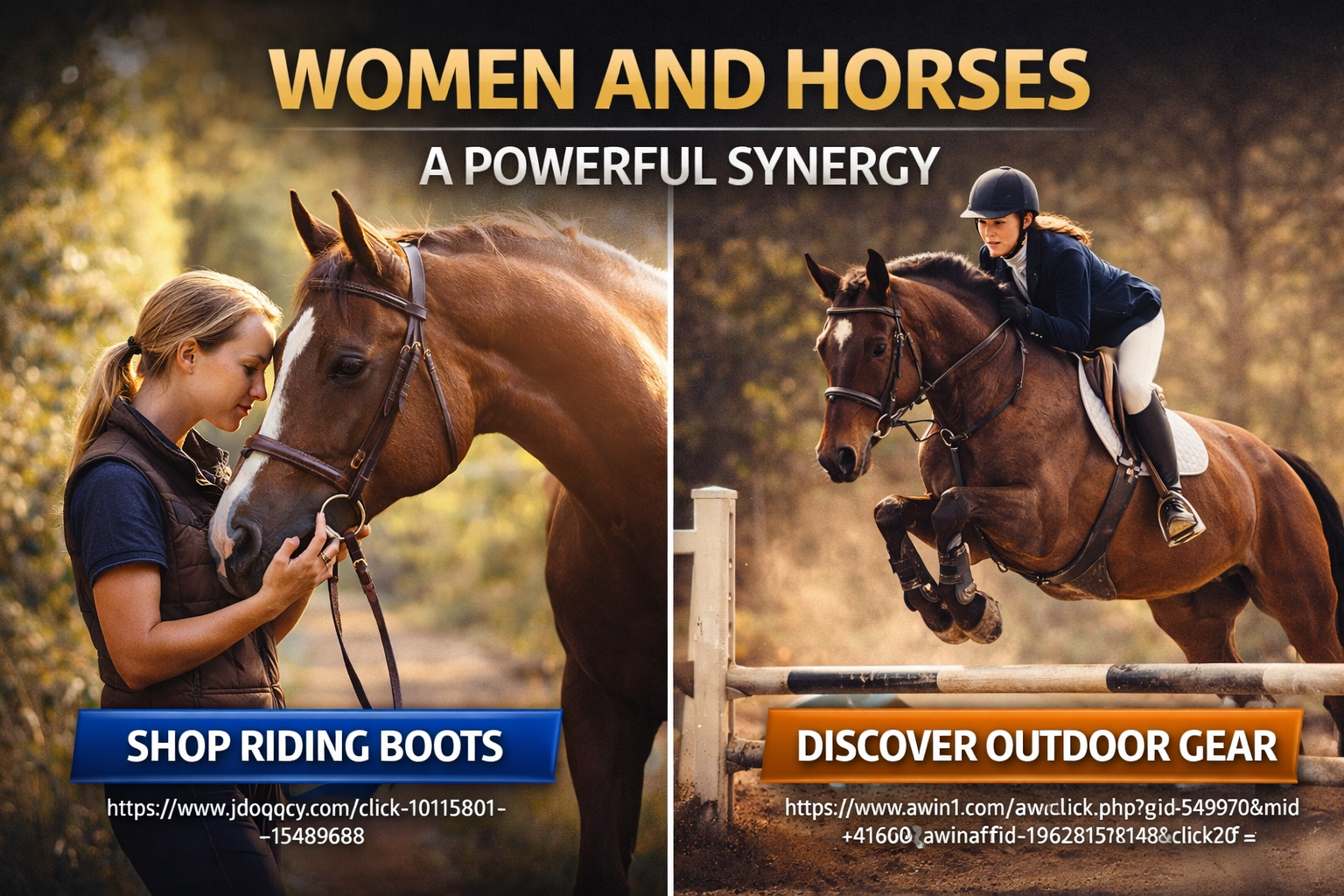
There is something timeless and powerful about the connection between women and horses. It is a relationship built not on force, but on communication, trust, and mutual respect. Across disciplines, cultures, and generations, women have consistently demonstrated a natural ability to connect with horses in ways that go beyond technique alone.
Horseback riding is one of the few sports where physical strength takes a back seat to emotional intelligence. While balance, posture, and control are essential, the true foundation of great horsemanship lies in understanding the animal beneath you. This is where many women excel, not because of physical differences alone, but because of a deeper willingness to build a partnership rather than assert dominance.
The Foundation of the Horse–Rider Connection
At its core, horsemanship is not about control, it is about communication. Horses are highly intuitive animals. They respond not just to physical cues, but to energy, emotion, and consistency. Riders who approach them with patience and awareness tend to develop stronger, more reliable bonds.
Women often bring a level of sensitivity and attentiveness that aligns naturally with how horses interpret the world. This creates a dynamic where trust is built gradually, rather than forced quickly. Over time, this trust becomes the foundation for everything else including performance, safety, and enjoyment.
Comfort and preparation also play a role in building this connection. Long hours in the saddle require reliable gear that supports both rider and environment. Proper footwear, for example, is often overlooked but essential for stability and control during rides.
👉 Explore durable riding and outdoor boots designed for real-world performance
Strength vs. Partnership: A Shift in Approach
Historically, many riders approached horses with a mindset of control and dominance. The idea was simple, establish authority, maintain discipline, and expect obedience. While this method can produce results, it often overlooks the emotional and psychological needs of the horse.
A more modern approach emphasizes partnership. Instead of forcing compliance, the goal is to guide the horse into understanding and responding willingly. This requires patience, consistency, and a willingness to adapt.
In many cases, women have led this shift. Their approach tends to prioritize communication over control, resulting in horses that are more responsive, relaxed, and cooperative over time.
Experience from the Field: Real-World Observations
Across riding schools, ranches, and guided tours worldwide, one pattern remains consistent, women make up a significant portion of the equestrian community. In many operations, they also represent the majority of instructors, trainers, and guides.
This is not accidental. It reflects a combination of dedication, education, and passion for the craft. Many female riders invest years into understanding equitation, horse behavior, and training techniques. Their focus extends beyond riding itself to include the overall well-being of the horse.
This level of commitment often translates into better outcomes, both for riders and animals. Horses trained with patience and consistency tend to develop stronger, longer-lasting partnerships with their riders.
For those spending extended time outdoors with horses, whether on trails, ranches, or expeditions, having reliable gear becomes part of the experience. Carrying essentials, staying organized, and preparing for changing conditions all contribute to a smoother ride.
👉 Browse rugged outdoor packs built for extended adventures
Training Philosophy: Patience Over Speed
One of the clearest differences in approach can be seen in how horses are trained. Traditional “fast-track” methods often aim for quick results, pushing horses through intensive programs to achieve immediate performance.
While these methods can produce short-term gains, they may not create a lasting bond between horse and rider.
In contrast, patient, non-confrontational training focuses on gradual development. Horses are introduced to new experiences step by step, allowing them to adapt without stress. This approach takes more time, but the results are often more stable and reliable.
Riders who embrace this philosophy understand that progress is not measured in speed, but in trust.
A Global Perspective on Women in Equestrian Roles
From ranches in North America to riding tours in Africa and South America, women are increasingly leading the way in equestrian activities. They serve as guides, trainers, and professionals who manage both horses and riders in challenging environments.
This global presence highlights a shift in the perception of equestrian roles. What was once seen as a male-dominated field has evolved into a space where skill, understanding, and connection matter more than physical strength.
Even historically, there are examples that suggest women have long played a role in equestrian culture. Stories of legendary horsewomen, from ancient mythology to modern competition, reinforce the idea that this connection is not new, it has simply become more visible.
The Modern Equestrian Lifestyle
Today, horseback riding is more than a sport. It is a lifestyle that combines outdoor exploration, personal growth, and a connection to nature.
Riders spend time not only in the saddle but also caring for horses, maintaining equipment, and preparing for long days outdoors. This lifestyle demands gear that is both functional and durable, capable of handling a wide range of conditions.
👉 Explore outdoor gear built for life beyond the trail
The right equipment supports the experience, but it is the relationship with the horse that defines it.
A Partnership Worth Celebrating
The bond between women and horses is not easily explained, but it is unmistakable. It is built on trust, strengthened through patience, and sustained by a shared understanding that goes beyond words.
Whether on a quiet trail ride or a demanding expedition, this connection continues to shape the world of equestrian sport and outdoor adventure.
In the end, it is not about who controls the horse, but who understands it.
And in that understanding, something powerful emerges, a partnership that benefits both rider and horse in ways that few other relationships can match.